Smart Customer Service Technology Saudi Businesses Are Adopting in 2026
Customer service in Saudi Arabia looks nothing like it did a decade ago. Branches, contact centers, and retail counters are quietly replacing clipboard-and-shout workflows with connected hardware that actually talks to each other. Two upgrades, in particular, keep showing up together on 2026 procurement lists: a modern queue management system in saudi arabia for the front of house, and professional-grade headsets for the agents handling calls and counter inquiries behind the scenes.
At first glance these look like unrelated purchases — one organizes foot traffic, the other improves voice clarity. In practice, they solve the same underlying problem: making every customer interaction faster, calmer, and easier to track. This article walks through why Saudi businesses are bundling these upgrades together, what to look for in each, and how to plan a rollout that doesn’t disrupt daily operations.
Why Front-of-House and Back-Office Upgrades Now Go Together
A queue system solves the visible problem: people standing around not knowing when they’ll be served. But once that line moves faster, the pressure shifts to the staff member handling the interaction — whether that’s a bank teller taking a phone call mid-conversation or a telecom retail agent juggling counter customers and a ringing line. If the audio quality on that call is poor, or the headset is uncomfortable after six hours, the efficiency gained at the kiosk gets lost at the counter.
That’s why facility managers across Riyadh, Jeddah, and the Eastern Province are now treating customer-experience technology as a single connected system rather than a pile of separate gadgets purchased whenever something breaks.
What a Modern Queue Management System Actually Delivers
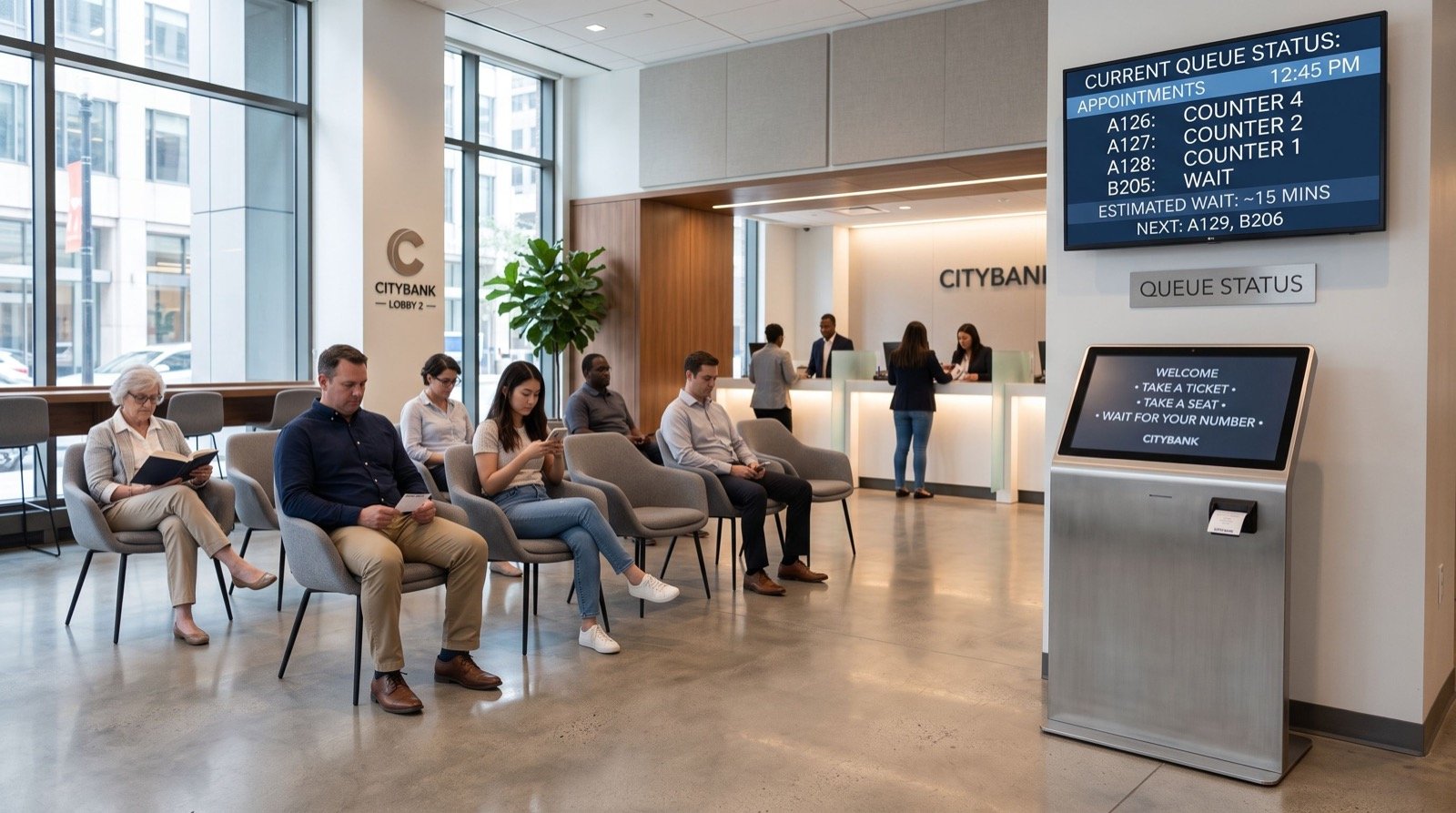
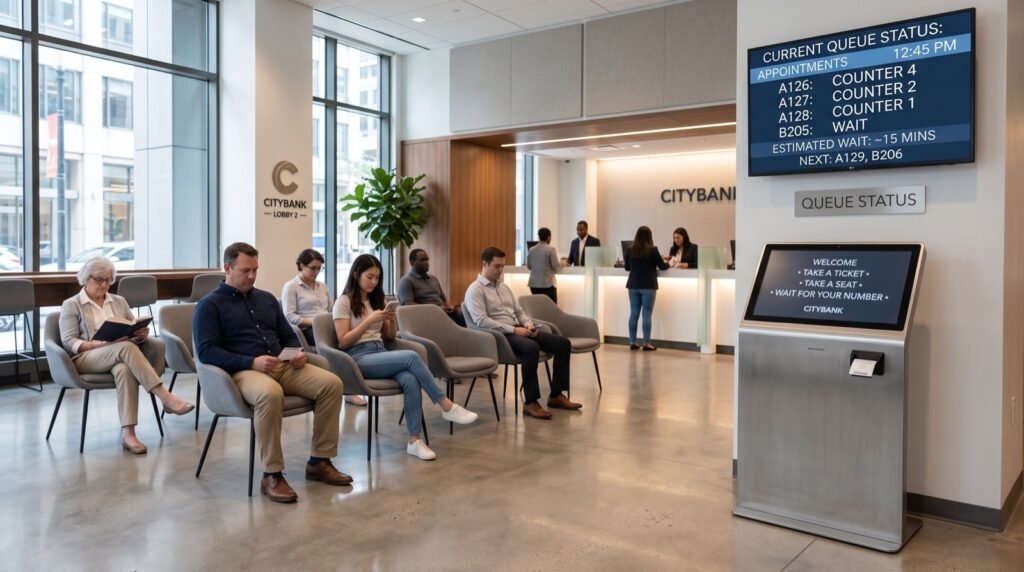
- Ticketing kiosks or QR-based virtual tickets
- Live digital signage showing wait times and ticket numbers
- Automatic load balancing across open counters
- Manager-facing dashboards with historical foot-traffic analytics
- SMS or app alerts so customers can wait away from the branch
The payoff is measurable: branches typically see shorter perceived wait times and higher customer satisfaction scores within the first few weeks of going live, simply because people can see progress instead of staring at a static line.
Why Headset Choice Quietly Makes or Breaks Agent Performance
Here’s a detail many procurement teams underestimate: the headset an agent wears for eight hours a day directly affects call clarity, hold-time accuracy, and even staff turnover. Occupational health researchers at the National Institute for Occupational Safety and Health have published guidance on workplace noise exposure that applies directly to busy branch floors, reinforcing why ergonomic, noise-isolating headsets are a safety consideration and not just a comfort upgrade. Cheap consumer earbuds pick up background chatter, fatigue the ear, and often can’t survive a full shift of daily use. That’s why a growing number of Saudi contact centers and telecom retail counters have standardized on the Addasound Epic 511 for daily counter and call-center work.
The appeal is practical rather than flashy: noise-canceling microphones that isolate the agent’s voice from a busy, echoing branch floor, a lightweight build for long shifts, and reliable wired or wireless connectivity depending on the station. For a queue system to feel genuinely faster to the customer, the person answering the call or counter needs audio that doesn’t force them to ask “sorry, can you repeat that?” three times per conversation.
Queue Kiosk vs. Agent Headset: Where Each One Solves a Different Bottleneck
| Bottleneck | Queue Management System | Professional Headset |
|---|---|---|
| Customers unsure how long they’ll wait | Solves directly | No effect |
| Noisy branch floor drowning out calls | Indirect (fewer crowds) | Solves directly |
| Uneven staff workload | Solves directly | No effect |
| Agent fatigue over long shifts | No effect | Solves directly |
| Manager visibility into performance | Dashboard analytics | Call-quality metrics |
How Much Does This Kind of Upgrade Actually Cost?
Costs scale with branch size and headcount. A single mid-sized branch rollout usually includes one or two ticketing kiosks, a digital display screen, a counter terminal per desk, and a monthly software subscription for cloud analytics. Headsets are typically budgeted per agent seat, with volume discounts kicking in once an order covers an entire contact center floor. Many Saudi businesses phase the rollout — queue hardware first, then headset refreshes the following quarter — to spread the capital expense without losing momentum.
Planning a Rollout That Doesn’t Disrupt Daily Operations
- Audit current pain points first. Walk the branch floor during peak hours before buying anything.
- Pilot in one location. Test kiosk placement and headset models with real staff feedback before a multi-branch order.
- Train staff on both systems together. Agents should understand how the queue dashboard and their headset work as one workflow.
- Review analytics monthly. Use queue data to spot peak hours and headset-reported call-quality issues early.
Businesses evaluating vendors for either upgrade often benefit from working with reliable local experts who can help translate a technical rollout into a customer-facing story worth promoting once the new system is live.
Real-World Signs Your Branch Is Overdue for an Upgrade
It’s not always obvious that a branch needs new technology until the symptoms pile up. Watch for these warning signs during a normal week of operations:
- Customers routinely ask staff “how much longer” more than once during a single visit
- Agents frequently ask callers to repeat themselves, especially during busy hours
- Staff report ear fatigue, headaches, or discomfort after full shifts wearing older headsets
- Managers have no reliable data on which hours see the heaviest foot traffic
- Disputes break out among customers over who was “next” in an unmanaged line
Any one of these on its own might be tolerable. Together, they signal that the branch is losing both customer goodwill and staff productivity every single day the old setup stays in place. Saudi retail banking and telecom groups that tracked these metrics before and after upgrading consistently report fewer complaints logged at the manager’s desk and noticeably calmer waiting areas within the first month.
Frequently Asked Questions
Do queue management systems and call-center headsets need to come from the same vendor?
No. Many Saudi businesses source ticketing hardware and audio equipment from specialized vendors in each category, then integrate reporting through a shared dashboard or simple manual tracking during the first few months.
How long does a typical branch rollout take?
Most single-branch installations, including staff training, complete within one to three weeks depending on network readiness and how many counters need new terminals.
Are noise-canceling headsets really necessary in a quiet office?
Even relatively quiet offices have background hum from HVAC systems, nearby conversations, and hold music. A noise-canceling microphone still measurably improves how clearly the customer on the other end hears the agent.
Can smaller branches justify this investment in 2026?
Yes. Entry-level kiosk packages and single-unit headset orders have become significantly more affordable, making the upgrade realistic for independent branches, not just large multi-location chains.
Bringing It Together
The businesses pulling ahead on customer satisfaction in 2026 aren’t necessarily spending the most money — they’re the ones treating the front counter and the back-office call desk as one connected experience. Pairing a dependable queue management system in saudi arabia with headsets built for long shifts closes the loop between “how long will I wait” and “will the person helping me actually hear what I’m saying.” Get both right, and the whole branch feels faster, even on a busy Thursday afternoon.